
Searching Is Acting: The Invisible Politics of a Click
Inside Ecosia and the Emergence of Purpose-Driven Digital Infrastructure
Amiar
6/25/20264 min read
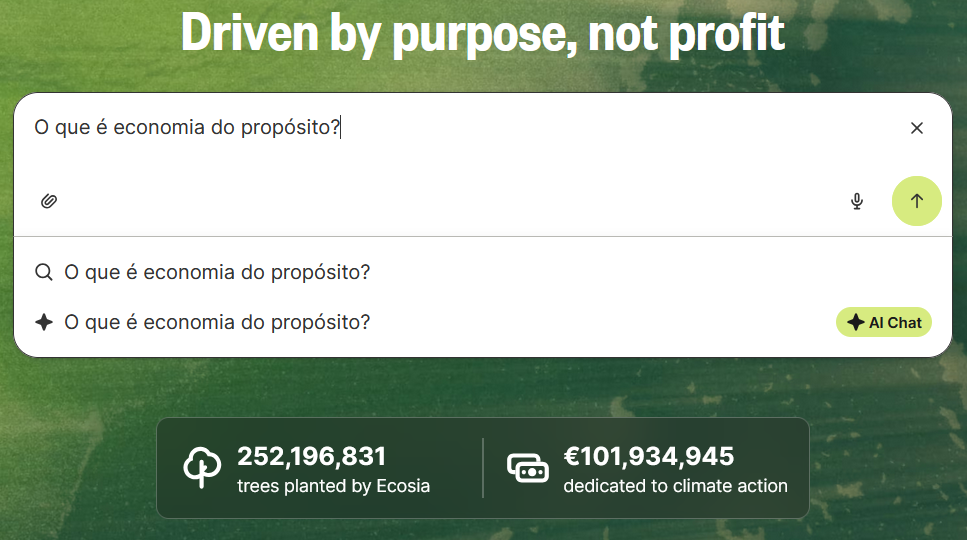
In a world where every digital action seems immaterial, the truth is uncomfortable: the internet has a body. It consumes energy, extracts resources, sustains vast infrastructures — and, above all, organizes power.
Searching is not neutral. It never has been.
The promise of search engines has always been simple: universal access to knowledge. Yet over the past decades, that promise has become inseparable from business models built on advertising, data extraction, and the concentration of power. The question is no longer “How do we find information?” but rather “Who controls access to reality?”
It is within this context that Ecosia emerges — not merely as a technological alternative, but as a political proposition.
A Search Engine That Redistributes Value
Founded in Berlin in 2009, Ecosia operates as a conventional search engine with one structural difference: it uses advertising revenue to finance reforestation and climate action projects.
At least 80% of its profits are directed toward environmental initiatives, including tree planting programs across dozens of countries.
By 2026, its cumulative impact has surpassed 250 million trees planted worldwide.
Yet reducing Ecosia to “a Google that plants trees” misses the essential point.
Infrastructure with Embedded Values
Ecosia reveals something fundamental: digital infrastructure is not neutral — it is an ethical choice encoded into systems.
It decides how information is ranked.
It defines who profits from attention.
It determines the ecological impact of every interaction.
By operating on renewable energy and investing its profits in ecological regeneration, Ecosia proposes a rare inversion:
👉 transforming negative externalities (emissions, energy consumption) into positive externalities (reforestation, biodiversity restoration, and local employment).
More importantly, it introduces financial transparency and limits on private profit extraction, positioning itself as a certified social enterprise.
The Smallest Gesture as Collective Action
Within the traditional narrative, climate action often implies sacrifice: consuming less, traveling less, giving something up.
Ecosia shifts that narrative.
Here, the smallest gesture — a search query — becomes part of a collective impact system. It does not solve the ecological crisis, but it reconfigures the relationship between everyday life and politics.
This is not about individual heroism.
It is about infrastructures that make sustainable behavior the default path.
Limits and Tensions
Ecosia also raises important questions that should not be ignored:
It remains partially dependent on infrastructure operated by major technology companies.
It still functions within the advertising model that underpins digital capitalism.
Its environmental impact, while measurable and meaningful, does not replace deeper structural transformations.
In other words:
👉 It is not a complete rupture — it is a hybrid transition.
And perhaps that is precisely what makes it relevant.
Searching Is Choosing a World
Every search is an invisible vote.
Not only about what we want to know, but about the systems we choose to sustain.
Ecosia will not change the world on its own.
But it makes something essential visible:
That even the most ordinary act — typing into a search box — can be reprogrammed as a political act.
And perhaps that is where transformation truly begins:
In the geopolitical arena of the twenty-first century — where data is often described as the “new oil” — Ecosia represents a break from the traditional extractive model, transforming virtual infrastructure into territorial and environmental resilience.
1. The Hegemony of the Click: Search Engines and Social Power
Today, roughly 85% of people with internet access rely on search engines to navigate reality.
This dependency grants major technology corporations geopolitical influence comparable to that of many nation-states:
Control of Narratives
Algorithms determine the visibility of information, influencing elections, consumer behavior, and global public debate.
Capital Centralization
In the conventional model, digital advertising revenue remains concentrated within corporate structures or distributed among shareholders, often disconnected from the biological and social realities of the regions where users live.
2. The Impact Model: Profit as a Tool for Regeneration
Founded in Berlin in 2009 by Christian Kroll, Ecosia introduced an impact-business model that challenges Silicon Valley norms.
Unlike corporations focused solely on market growth, Ecosia operates as a Purpose Company: by statute, the company cannot be sold and its profits cannot be extracted for private gain.
Operational KPIs:
Tree Planting Volume: More than 250 million trees planted worldwide.
Conversion Efficiency: Approximately 50 searches generate enough revenue to plant one tree.
Financial Commitment: 100% of profits are dedicated to climate action, with at least 80% of surplus revenue directly funding reforestation projects.
Radical Transparency: Detailed monthly financial reports allow users to audit how their searches generate impact.
3. Geopolitics on the Ground: Where the Digital Meets the Soil
Ecosia’s operational geography reflects a strategic understanding of planetary challenges.
The platform works across more than 35 countries through over 70 active projects, prioritizing regions facing environmental and social instability.
The Great Green Wall (Sahel)
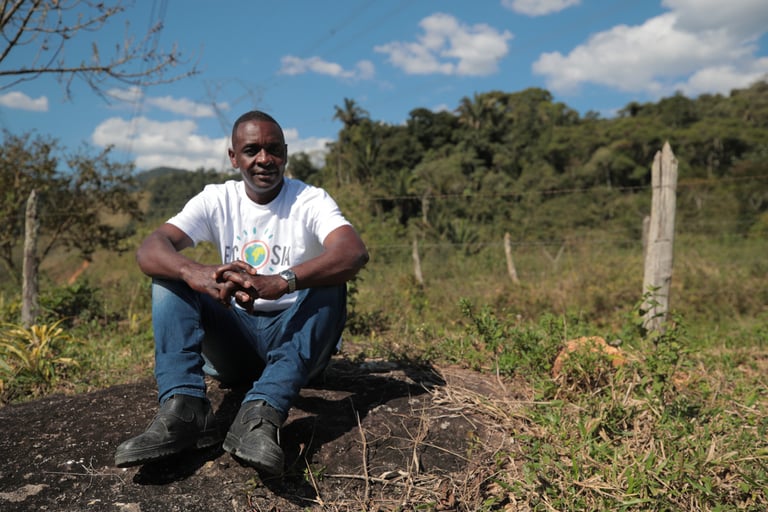
In countries such as Senegal and Burkina Faso, tree planting combats desertification.
Here, a tree becomes a geopolitical tool: reducing resource conflicts, stabilizing communities, and limiting forced migration.
Brazil (Atlantic Forest)
Projects focus on restoring biodiversity corridors in regions under intense agricultural pressure while protecting critical water systems.
Indonesia
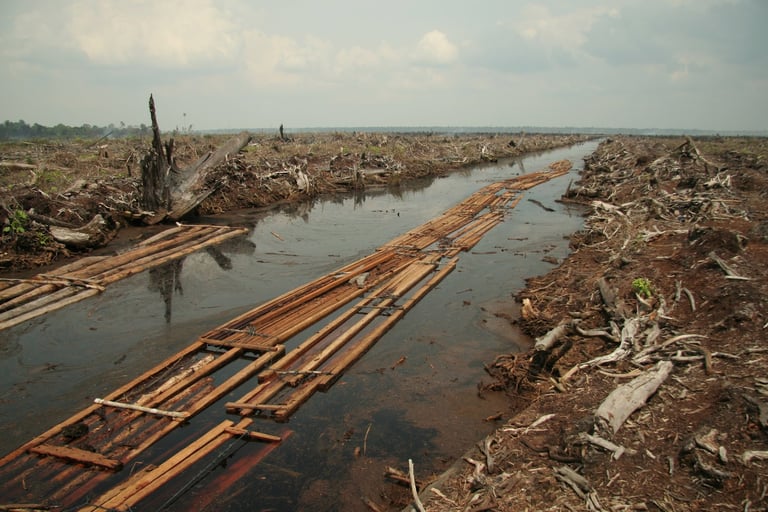
Reforestation initiatives restore ecosystems degraded by palm oil monoculture, helping recover ecological sovereignty in exploited territories.
4. Privacy and Digital Sovereignty
Ecosia’s social impact extends beyond ecology into data governance.
In an era of constant surveillance, the platform adopts a model of digital sovereignty:
No User Profiling: Personal data is not sold to third parties.
Anonymization: Searches are encrypted and anonymized after one week.
Privacy by Design: User behavior is not transformed into long-term behavioral profiles.
Conclusion: Planetary Consciousness in Practice
Ecosia demonstrates that technology does not need to be a force of exhaustion.
By connecting humanity’s digital need for information with the biological need for photosynthesis, the platform shows that code can be used to sustain the material foundations upon which politics, culture, and society depend.
It is an example of how collective intelligence can regenerate the real world — one click at a time.

Our Socials
Join our community or directly ask any question, we are happy to clarify
Book a call?

2026. All rights reserved. ThEndorSemenT is a non-profit initiative and does not constitute an investment vehicle or financial service under applicable regulations









parent organization



NEWSLETTER
IMPACT
Transparent systems that empower informed participation and shared responsibility
4 Incubated projects
1 Endorsed brand
€30K Funding secured
Transparency is the way