
The Odysee of LBRY
Architecture, Operation, Decentralization, and the Future of Digital Publishing
Amiar
7/9/20268 min read
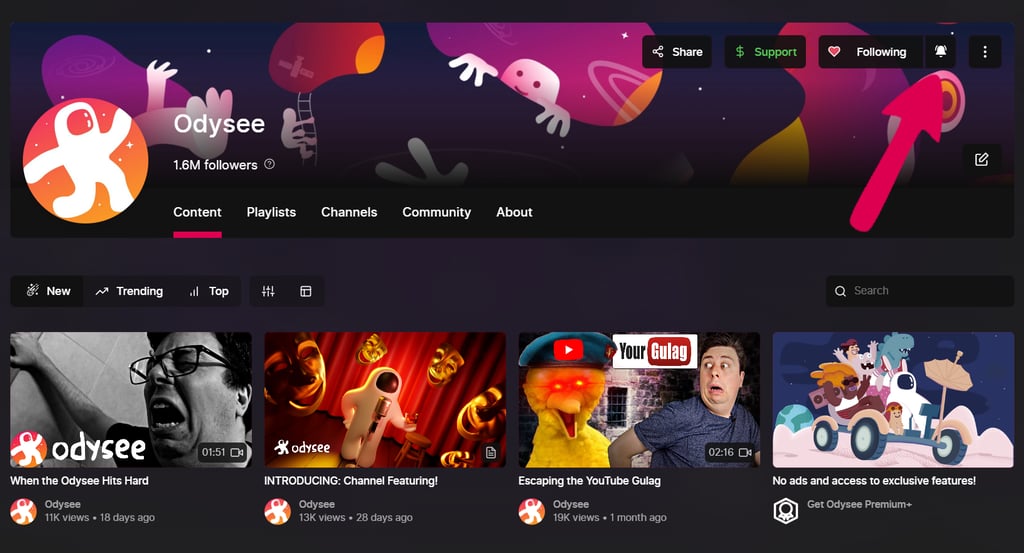
Over the past several decades, the Internet has fundamentally transformed the way humanity creates, distributes, and consumes information. The emergence of the World Wide Web enabled virtually anyone with an Internet connection to publish documents, images, audio recordings, and video content for a potentially global audience. As the Internet matured, however, an increasing concentration of publishing power emerged around a relatively small number of technology companies.
Search engines, social networks, cloud platforms, and video-sharing services gradually became the primary gateways through which digital information is produced, discovered, distributed, and monetized. Although this centralized model has delivered remarkable advantages—including scalability, ease of use, high availability, and sophisticated recommendation systems—it has also introduced important questions concerning technological dependence, platform governance, digital preservation, privacy, competition, and freedom of publication.
Against this background, a new generation of decentralized technologies began to emerge. Rather than replacing the Internet itself, these projects sought to restore many of its original architectural principles: openness, distributed infrastructure, interoperability, resilience, and the absence of single points of control.
Among the most ambitious of these initiatives is the LBRY protocol, a decentralized infrastructure designed for publishing and distributing digital content. Built on top of this protocol is Odysee, a user-friendly platform that provides an experience comparable to conventional video-sharing services while leveraging the decentralized capabilities of the underlying network.
Although the names LBRY and Odysee are often used interchangeably, they refer to different components of the same technological ecosystem. LBRY is the protocol that defines how content is identified, authenticated, and distributed across the network. Odysee is an application that uses this protocol to provide an accessible graphical interface for end users.
The Evolution of the Internet Toward Centralized Models
During the early years of the commercial Internet, particularly throughout the 1990s, digital content was distributed across thousands of independently operated servers.
Universities hosted their own websites.
Research institutions maintained dedicated infrastructure.
Businesses operated proprietary web servers.
Individual users often managed personal websites from independent hosting providers.
The discovery of information relied primarily on hyperlinks, search engines, and manually curated directories. No single organization controlled the global flow of information.
As Internet adoption accelerated, however, publishing content through independently managed servers became increasingly impractical for ordinary users.
A new generation of online platforms dramatically simplified this process.
Instead of configuring servers, managing databases, securing operating systems, and maintaining web applications, users only needed to create an account.
The platform assumed responsibility for nearly every technical aspect of publication.
This model offered significant advantages:
simplified content publishing;
lower operational costs;
highly scalable infrastructure;
integrated search capabilities;
automated content recommendations;
centralized monetization systems;
user authentication;
global content delivery.
Over time, a relatively small number of companies came to manage an enormous proportion of worldwide Internet traffic.
Responsibilities that had once been distributed among countless independent operators gradually became concentrated within large technology platforms.
These organizations now control many of the core functions of digital publishing, including:
content storage;
user authentication;
search indexing;
content distribution;
recommendation algorithms;
advertising systems;
monetization policies;
moderation procedures.
This concentration has undoubtedly simplified the user experience, yet it has also created new technological, economic, and social challenges.
The Challenge of Centralization
From an engineering perspective, centralized systems offer numerous practical advantages.
A single organization can optimize hardware deployment, coordinate software updates, monitor network health, respond rapidly to security incidents, and maintain consistent performance across an entire service.
Centralization also simplifies governance.
Policies can be implemented uniformly.
Infrastructure investments can be coordinated efficiently.
Security mechanisms can be standardized.
Operational decisions can be executed rapidly.
However, these benefits come at the cost of dependency.
When a single organization controls the infrastructure, it also determines many aspects of how that infrastructure operates.
Such an organization may establish:
acceptable use policies;
moderation standards;
monetization requirements;
recommendation algorithms;
technical restrictions;
commercial priorities.
In addition, failures affecting the operator—whether technical, financial, legal, or organizational—may immediately impact millions of users.
Within the field of distributed systems engineering, this situation is commonly described as the existence of a Single Point of Failure (SPOF).
A single point of failure is any component whose malfunction can compromise the availability or functionality of an entire system.
Reducing or eliminating these points of failure has become one of the defining objectives of decentralized architectures.
The Search for Alternatives
The emergence of cryptocurrencies demonstrated that distributed systems could operate successfully without relying upon permanent centralized authorities.
The publication of Bitcoin in 2008 introduced an innovative combination of cryptographic techniques, distributed consensus mechanisms, and economic incentives capable of maintaining a decentralized ledger on a global scale.
Although Bitcoin was specifically designed as a digital monetary system, researchers and engineers quickly recognized that many of its underlying principles could be applied far beyond financial transactions.
Potential applications included:
distributed storage;
decentralized identity;
digital publishing;
social networking;
digital marketplaces;
electronic voting systems;
intellectual property management;
multimedia distribution.
This realization inspired a new generation of decentralized Internet protocols.
Rather than creating isolated applications, these projects sought to establish foundational infrastructure upon which numerous services could be built.
Among the most influential initiatives were:
InterPlanetary File System (IPFS);
Filecoin;
Arweave;
BitTorrent and its subsequent decentralized developments;
Secure Scuttlebutt;
Nostr;
LBRY.
Each project adopted a distinct architectural philosophy to solve different aspects of decentralized information exchange.
LBRY ultimately pursued a hybrid architecture that combines blockchain technology, asymmetric cryptography, distributed networking, and peer-to-peer content delivery into a unified publishing ecosystem.
The LBRY Community
One of the defining characteristics of the LBRY ecosystem has always been the central role played by its community. From its earliest stages, the project attracted software developers, content creators, open-source advocates, researchers, and users interested in decentralized technologies and alternative models of digital publishing.
Unlike many commercial platforms, where the evolution of a service depends entirely on the company that owns it, LBRY was designed as an open protocol. This approach enabled independent developers to build applications, tools, libraries, and integrations without requiring permission from a central authority.
Over time, the community organized around several shared objectives:
improving the protocol;
developing alternative client applications;
creating developer tools;
promoting decentralized publishing;
supporting content creators;
preserving the network infrastructure.
Following the legal and financial difficulties experienced by the original company, the community assumed an even greater role in preserving the ecosystem by maintaining source code repositories, documentation, discussion forums, and independent development initiatives.
Content Creators
Much of Odysee's visibility resulted from the growing number of creators who chose to publish their work on the platform.
Its creator community spans a wide range of disciplines, including:
technology;
software development;
science;
education;
history;
gaming;
music;
documentaries;
digital art;
politics;
culture.
Many creators simultaneously publish on conventional platforms and on Odysee, while others migrated in search of greater publishing independence or after facing demonetization or account restrictions elsewhere.
The diversity of available content reflects the platform's open nature, although it has also contributed to ongoing debates regarding moderation, governance, and the responsibilities associated with decentralized publishing.
Software Developers
Software developers represent one of the most important groups within the LBRY ecosystem.
Because the protocol is openly documented, developers are free to study its architecture, contribute improvements, or create entirely new applications built upon its infrastructure.
Over the years, the community has produced numerous technical resources, including:
software libraries;
programming APIs;
automation tools;
experimental clients;
integration frameworks;
technical documentation;
administrative utilities.
This collaborative development model encourages innovation by allowing multiple independent teams to explore different solutions without relying exclusively on a single organization.
Client Applications
A clear distinction must always be made between the LBRY protocol and the applications that interact with it.
The protocol defines the rules governing the decentralized network.
Client applications provide the interfaces through which users publish, discover, and consume content.
Several clients have existed throughout the history of the project.
LBRY Desktop
For several years, LBRY Desktop served as the official client for the protocol.
It enabled users to:
publish content;
search the decentralized network;
manage channels;
synchronize their digital wallet;
interact directly with both the blockchain and the peer-to-peer network.
Unlike purely web-based services, LBRY Desktop incorporated much of the protocol's functionality locally, giving users a more direct connection to the decentralized infrastructure.
For developers and technically inclined users, it also provided valuable insight into the internal operation of the protocol.
Odysee
Odysee eventually became the best-known client within the LBRY ecosystem.
Rather than requiring users to operate a full network node, it offers a modern web interface that resembles mainstream video-sharing platforms while hiding much of the underlying technical complexity.
Most users interact with the decentralized infrastructure without needing to understand concepts such as blockchain synchronization, cryptographic identities, or peer-to-peer networking.
For many people, Odysee became their first introduction to the LBRY protocol.
Its familiar interface significantly lowered the barrier to entry for users interested in decentralized publishing technologies.
The Current State of the Project
The evolution of the LBRY ecosystem changed significantly following legal action brought by the U.S. Securities and Exchange Commission (SEC) against LBRY Inc.
The SEC argued that the company's distribution of LBRY Credits (LBC) constituted an unregistered securities offering under United States securities law.
In 2022, a federal court ruled in favor of the SEC on this issue, and LBRY Inc. subsequently entered liquidation proceedings and ceased operations during 2023.
It is important to distinguish between three separate elements of the ecosystem:
LBRY Inc., the company that originally developed the protocol;
the LBRY protocol itself, whose specifications and source code remain publicly available;
Odysee, which has continued operating independently of the original company.
Consequently, the closure of LBRY Inc. did not mean that the underlying technology disappeared, nor did it bring an end to the wider community that had formed around the protocol.
The Community After LBRY Inc.
Following the dissolution of LBRY Inc., community members continued contributing to various aspects of the ecosystem.
These efforts include:
maintaining documentation;
preserving source code repositories;
fixing software defects;
developing compatible applications;
researching the protocol's architecture;
assisting new users and developers.
As is common with many open-source projects, responsibility for the ecosystem shifted from a centralized organization toward a distributed community of volunteers and independent contributors.
This transition reflects one of the original philosophical goals of decentralized technologies: reducing dependence on any single institution while allowing knowledge and software to remain publicly accessible.
The Future of Odysee
The future of Odysee will depend on a combination of technological, economic, legal, and community-driven factors.
As the most widely recognized application built upon the LBRY protocol, Odysee occupies a unique position within the decentralized publishing landscape. Its long-term development will largely depend on its ability to continue attracting both content creators and viewers while adapting to an increasingly competitive digital media environment.
Several factors are likely to shape its future:
continued growth of its creator community;
improvements to the user experience;
ongoing maintenance and evolution of the underlying infrastructure;
interoperability with other decentralized technologies;
regulatory developments affecting digital platforms and blockchain ecosystems;
the platform's ability to balance openness with effective content moderation.
Unlike many experimental decentralized projects, Odysee has demonstrated that a blockchain-supported publishing platform can offer an interface familiar to mainstream users while abstracting much of the underlying technical complexity. This approach lowers the barrier to entry for audiences who may have little or no knowledge of decentralized technologies.
At the same time, Odysee faces significant challenges. It operates in a market dominated by large, well-established platforms with vast financial resources, mature recommendation algorithms, extensive creator ecosystems, and global advertising networks. Competing directly with these services requires continuous innovation while preserving the distinctive characteristics that differentiate Odysee from conventional platforms.
Content moderation is likely to remain one of the platform's most significant strategic challenges. As a gateway to a decentralized publishing protocol, Odysee must continually balance freedom of expression, user safety, legal compliance, and community standards. Achieving this balance is considerably more complex than in fully centralized systems because decisions made by the platform do not necessarily remove content from the underlying decentralized network.
Another important factor is the continued development of the broader decentralized web. As interest in open protocols, digital ownership, and interoperable online services grows, platforms such as Odysee may benefit from increasing public awareness of alternatives to traditional platform-centric models.
Regardless of its future market share, Odysee has already demonstrated that decentralized publishing can be presented through a user-friendly interface without requiring users to understand the technical details of blockchain technology or peer-to-peer networking. In doing so, it has helped bridge the gap between advanced decentralized infrastructure and everyday Internet users.
Whether Odysee ultimately becomes a mainstream platform or remains a specialized alternative, its contribution extends beyond its own ecosystem. It serves as a practical example of how decentralized protocols can support real-world digital publishing services, influencing ongoing discussions about platform governance, creator independence, digital ownership, and the future architecture of the Internet.
Our Socials
Join our community or directly ask any question, we are happy to clarify
Book a call?

2026. All rights reserved. ThEndorSemenT is a non-profit initiative and does not constitute an investment vehicle or financial service under applicable regulations











parent organization



NEWSLETTER
IMPACT
Transparent systems that empower informed participation and shared responsibility
4 Incubated projects
1 Endorsed brand
€30K Funding secured
Transparency is the way